

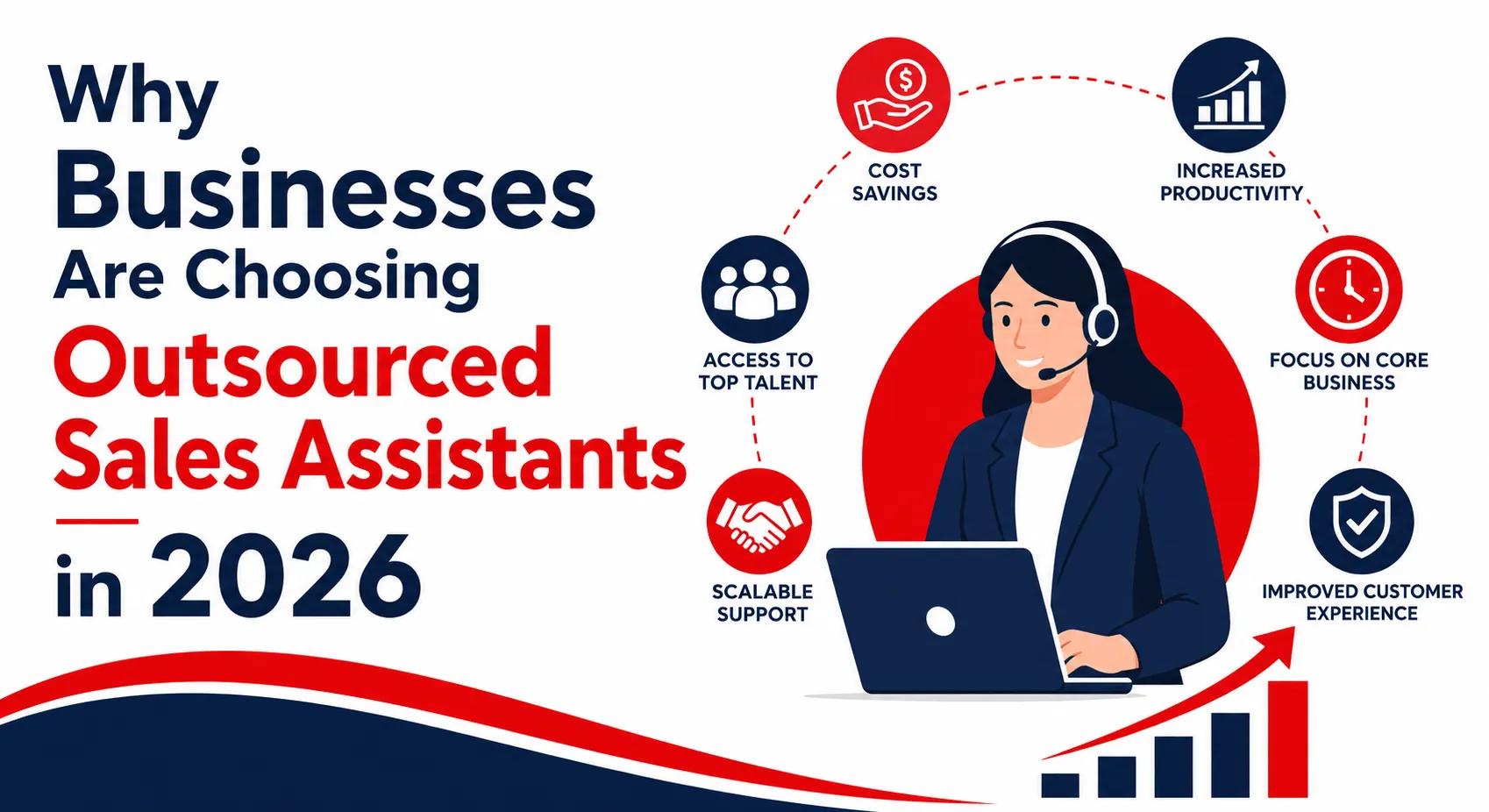
A quiet shift is shaping how companies handle sales support, and it shows up first in how teams delegate early-stage customer conversations. Many businesses now rely on an outsourced sales assistant to manage prospect follow-ups, appointment setting, and CRM updates without stretching internal teams.
Most of this change comes from how sales cycles have become more layered. Leads require faster responses, cleaner tracking, and consistent engagement across multiple channels. Internal teams often spend too much time on repetitive coordination work, which reduces focus on closing deals. An outsourced setup fills that operational gap with structured support.
Invedus Outsourcing is often mentioned in this space as one of the providers offering distributed sales assistance models that integrate with existing CRM workflows. Companies working with such providers usually keep their core sales strategy in-house while shifting execution-heavy tasks outward. This separation helps maintain focus on revenue conversations while routine touchpoints stay consistently managed.
The approach has become part of how modern sales teams are organized, especially in service-driven and SaaS-heavy industries where lead volume can fluctuate quickly.

Why do companies depend on outsourced sales assistants for daily sales execution?
Sales execution today depends on speed and consistency. Many deals are influenced by how quickly a lead receives a response and how regularly they are followed up. Outsourced assistants fit into this rhythm by handling structured outreach tasks throughout the day.
They typically manage activities such as lead qualification notes, CRM updates, email follow-ups, and scheduling. These tasks seem small individually, but together they shape pipeline momentum. When handled consistently, they reduce drop-offs that often happen when internal teams are overloaded.
A key reason for adoption is workload balance. Sales representatives often split attention between prospecting and administrative tasks. Outsourced support allows them to focus more on conversations that directly influence revenue outcomes.
In some setups, providers like Invedus Outsourcing integrate assistants into defined sales workflows. This includes aligning response timing, maintaining communication logs, and organizing lead stages inside CRM tools. The goal is operational consistency across every lead interaction.
Companies also appreciate the flexibility of scaling this support based on campaign intensity. During high-lead periods, more assistants can be added without restructuring internal hiring plans, which keeps operations stable even when demand changes.
How does an outsourced sales assistant affect pipeline quality and conversion flow?
Pipeline quality depends on how well early-stage leads are managed. When response times slow down or follow-ups become irregular, opportunities often weaken before reaching decision stages. Outsourced assistants help maintain continuity across these stages by ensuring that every lead receives consistent attention.
Their role supports structured communication. Leads are not left waiting between touchpoints, and CRM records stay updated with accurate interaction details. This reduces confusion inside the sales team and helps maintain clearer forecasting.
Another impact is better segmentation of leads. As assistants handle initial classification and tagging, sales representatives can focus on leads that show stronger intent. This creates a more organized pipeline where attention is directed toward higher-value opportunities.
Companies using outsourced support models, including those structured through Invedus Outsourcing, often design workflows where assistants act as the first layer of sales interaction. This includes filtering inbound queries and preparing summaries for sales representatives before calls.
Over time, this structure improves conversion flow by reducing friction between lead entry and sales engagement. The pipeline becomes easier to manage, and fewer opportunities fall through due to missed follow-ups or delayed responses.
Why are outsourced sales assistants becoming a long-term operating model?
The shift toward outsourced sales support is not limited to short-term cost control. It reflects how companies are restructuring sales operations around specialization. Internal teams focus on negotiation, closing, and relationship building, while execution-heavy tasks are handled externally.
This division creates more predictable workflows. Sales teams operate with clearer daily priorities, and support tasks follow defined schedules managed by external assistants. The result is a steadier pace across the entire sales cycle.
Another reason for long-term adoption is access to broader talent pools. Businesses can work with assistants who are trained in specific CRM systems, outreach methods, and industry workflows without building that expertise internally from scratch.
Invedus Outsourcing appears in this context as part of the ecosystem offering structured virtual sales support. Alongside similar providers, it contributes to how companies build distributed sales teams that operate across time zones and maintain continuous engagement with prospects.
The model also adapts easily to changing sales volumes. Companies can expand or reduce assistant capacity based on campaign needs without altering their core team structure, which makes it suitable for growing and seasonal businesses.
How are businesses integrating outsourced assistants into modern sales teams?
Integration usually begins with defining clear boundaries between internal and external roles. Sales representatives focus on live conversations and deal progression, while outsourced assistants manage lead movement, documentation, and follow-up coordination.
Most companies connect assistants directly to CRM systems so updates happen in real time. This reduces manual handoffs and keeps all lead data centralized. Communication tools also play a role, with shared dashboards and task trackers supporting daily alignment.
Training is another key factor. Outsourced assistants are often onboarded with specific scripts, response guidelines, and qualification criteria so their interactions remain consistent with the company’s sales approach. This ensures that early-stage conversations follow the same structure across all leads.
In this setup, Invedus Outsourcing is one of the names used by businesses looking to extend their sales operations without building large in-house support teams. The focus stays on creating continuity between marketing, lead capture, and sales follow-up activities.
The integration model works best when responsibilities are clearly defined and communication between internal and external teams remains structured throughout the sales cycle.
Final thoughts
Outsourced sales support has become part of how sales teams structure their daily operations. The model focuses on keeping lead movement steady while allowing internal teams to concentrate on higher-value conversations. This separation of roles has made sales systems more predictable and easier to manage.
As companies continue refining distributed team setups, platforms like Invedus Outsourcing remain part of how businesses explore structured external support for sales execution. For teams looking to extend their capacity without rebuilding internal workflows, the model fits naturally into existing CRM-driven environments.
For businesses exploring structured support options, the next step often starts with a simple evaluation of whether to Hire A Virtual Assistant for sales operations that need consistent follow-through and organized pipeline management.
Frequently asked questions
What does an outsourced sales assistant do?
An outsourced sales assistant handles lead support tasks such as follow-ups, CRM updates, scheduling, and initial prospect communication. Their work helps keep the sales pipeline organized and active. They support sales teams by maintaining consistency in daily execution tasks.
How is an outsourced sales assistant different from a sales representative?
A sales representative focuses on closing deals and managing client relationships. An outsourced sales assistant supports the process by handling early-stage tasks and administrative work. This allows sales representatives to spend more time on direct revenue conversations.
Is outsourcing sales assistance suitable for small businesses?
Yes, small businesses often benefit from outsourced sales assistance because it reduces the need for large internal teams. It also helps maintain consistent follow-ups and structured lead management without adding overhead complexity.
Can outsourced sales assistants work with CRM systems?
Yes, most outsourced sales assistants are trained to work with common CRM platforms. They update lead statuses, log interactions, and manage pipeline stages directly inside these systems. This keeps sales data organized and accessible.
What type of businesses use outsourced sales assistants the most?
Service-based companies, SaaS businesses, and growing startups often use outsourced sales assistants. These businesses usually deal with high lead volumes and need structured follow-up systems to maintain conversion flow.