

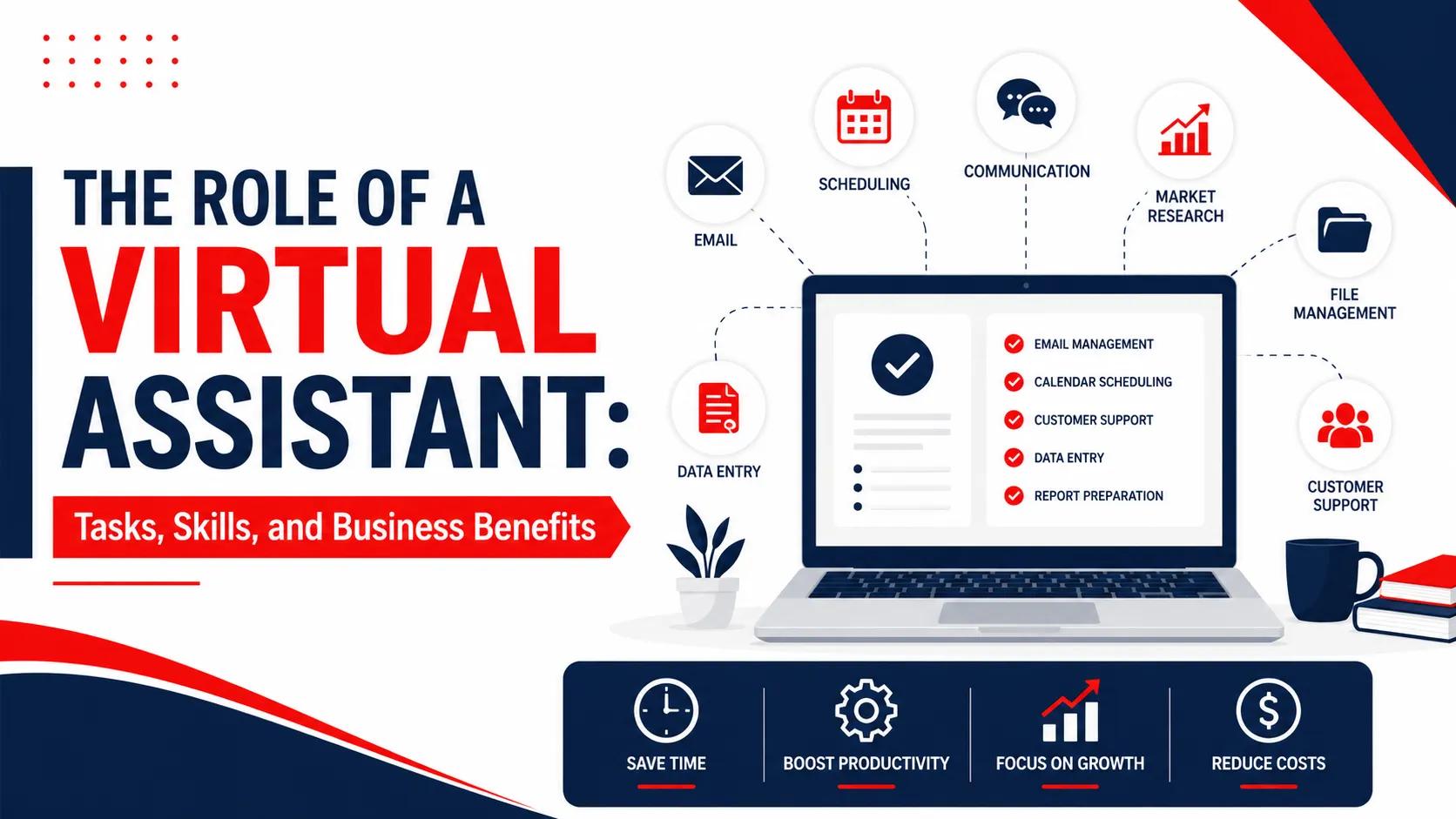
Running a business often means wearing multiple hats. One moment you're responding to customer inquiries, and the next you're managing schedules, updating spreadsheets, or following up with leads. As responsibilities pile up, many business owners start asking themselves: what does a virtual assistant do, and can one help lighten the workload? The answer is simple, a virtual assistant can take over many time-consuming tasks, allowing business leaders to focus on growth, strategy, and revenue-generating activities.
Understanding the Role of a Virtual Assistant
A virtual assistant (VA) is a remote professional who provides administrative, technical, creative, or operational support to businesses and entrepreneurs. Unlike traditional employees, virtual assistants work remotely and can be hired on a full-time, part-time, or project basis.
Their flexibility makes them a valuable resource for startups, small businesses, consultants, agencies, and even large enterprises looking to streamline operations without expanding in-house teams.
Common Tasks Handled by Virtual Assistants
The responsibilities of a virtual assistant vary depending on business needs. Some focus on administrative work, while others specialize in marketing, customer service, bookkeeping, or industry-specific support.
Administrative Support
Administrative tasks are among the most commonly outsourced responsibilities.
These include:
Managing calendars and appointments
Scheduling meetings
Organizing emails and inboxes
Data entry and database management
Preparing reports and documents
Travel planning and coordination
By taking care of routine administrative work, virtual assistants help business owners reclaim valuable hours each week.
Customer Service Assistance
Many businesses rely on virtual assistants to maintain strong customer relationships.
Common customer support tasks include:
Responding to customer inquiries
Managing support tickets
Processing orders and refunds
Handling live chat support
Following up with clients
Quick and professional communication can significantly improve customer satisfaction and retention.
Marketing Support
Virtual assistants often play an important role in marketing operations.
Their responsibilities may include:
Social media management
Content scheduling
Email marketing support
Blog formatting and publishing
Basic SEO tasks
Market research
These activities help businesses maintain a consistent online presence without overwhelming internal teams.
Sales and Lead Generation
Sales-focused virtual assistants contribute directly to business growth by:
Identifying potential leads
Maintaining CRM systems
Conducting prospect research
Scheduling sales calls
Following up with prospects
This support allows sales teams to spend more time closing deals and less time on administrative work.
Essential Skills of a Successful Virtual Assistant
A skilled virtual assistant brings more than just availability. The most effective professionals possess a combination of technical and interpersonal skills.
Strong Communication
Since virtual assistants work remotely, clear communication is critical. They must be able to understand instructions, provide updates, and interact professionally with clients and customers.
Time Management
Virtual assistants often juggle multiple responsibilities and deadlines. Strong organizational skills help ensure tasks are completed accurately and on time.
Technical Proficiency
Most virtual assistants work with digital tools such as:
Google Workspace
Microsoft Office
Project management platforms
CRM software
Communication tools
Social media scheduling platforms
Familiarity with these systems enables them to integrate seamlessly into business operations.
Problem-Solving Ability
Business environments are constantly changing. A proactive virtual assistant can identify challenges, suggest solutions, and handle issues independently when appropriate.
Key Business Benefits of Hiring a Virtual Assistant
The growing demand for virtual assistants is driven by the tangible benefits they provide.
Increased Productivity
Delegating routine tasks allows business owners and managers to focus on strategic initiatives rather than daily administrative work.
Cost Savings
Hiring a remote professional is often more cost-effective than recruiting a full-time in-house employee. Businesses can avoid expenses related to office space, equipment, benefits, and training.
Greater Flexibility
Virtual assistants can be hired based on workload requirements. This flexibility helps businesses scale support up or down as needed.
Access to Specialized Expertise
Many virtual assistants develop expertise in areas such as customer support, digital marketing, bookkeeping, real estate, eCommerce, and executive assistance. Businesses gain access to these skills without making long-term hiring commitments.
Final Thoughts
As companies continue searching for smarter ways to operate efficiently, virtual assistants have become an increasingly valuable part of modern business operations. Whether the goal is improving productivity, reducing overhead costs, or gaining access to specialized support, understanding what does a virtual assistant do can help business owners make informed staffing decisions.
If you're considering hiring remote support, it may be worth exploring some of the Most Affordable Virtual Assistant Companies that offer experienced professionals across various business functions. Reputable outsourcing providers can help match you with skilled virtual assistants who fit your budget, workload, and long-term business goals, making the hiring process both simple and cost-effective.